AI-first financial firms take 80 days longer to recover
18 Aug 2026 · AI Security · CISO Careers
Fastly 2026 ~7 months to recover · 80 days longer · 135% higher cost
Financial firms that have built AI deeply into their operations are reporting higher costs and longer recovery times after cyber incidents.
What the research found
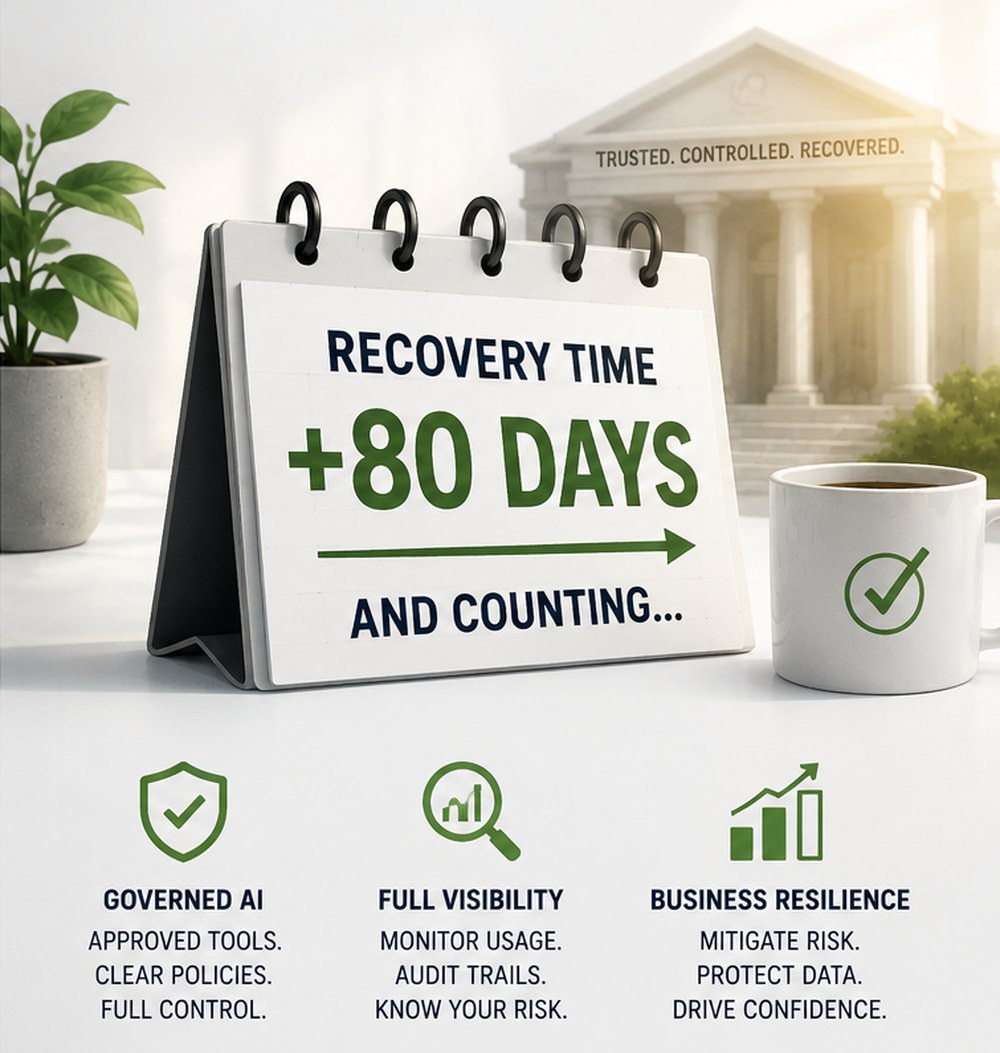
Fastly's 2026 Global Security Research Report found that AI-first organizations took almost seven months on average to recover from a security incident, around 80 days longer than organizations that were not AI-first. The financial impact of a major breach was more than 135% higher.
Where the exposure comes from
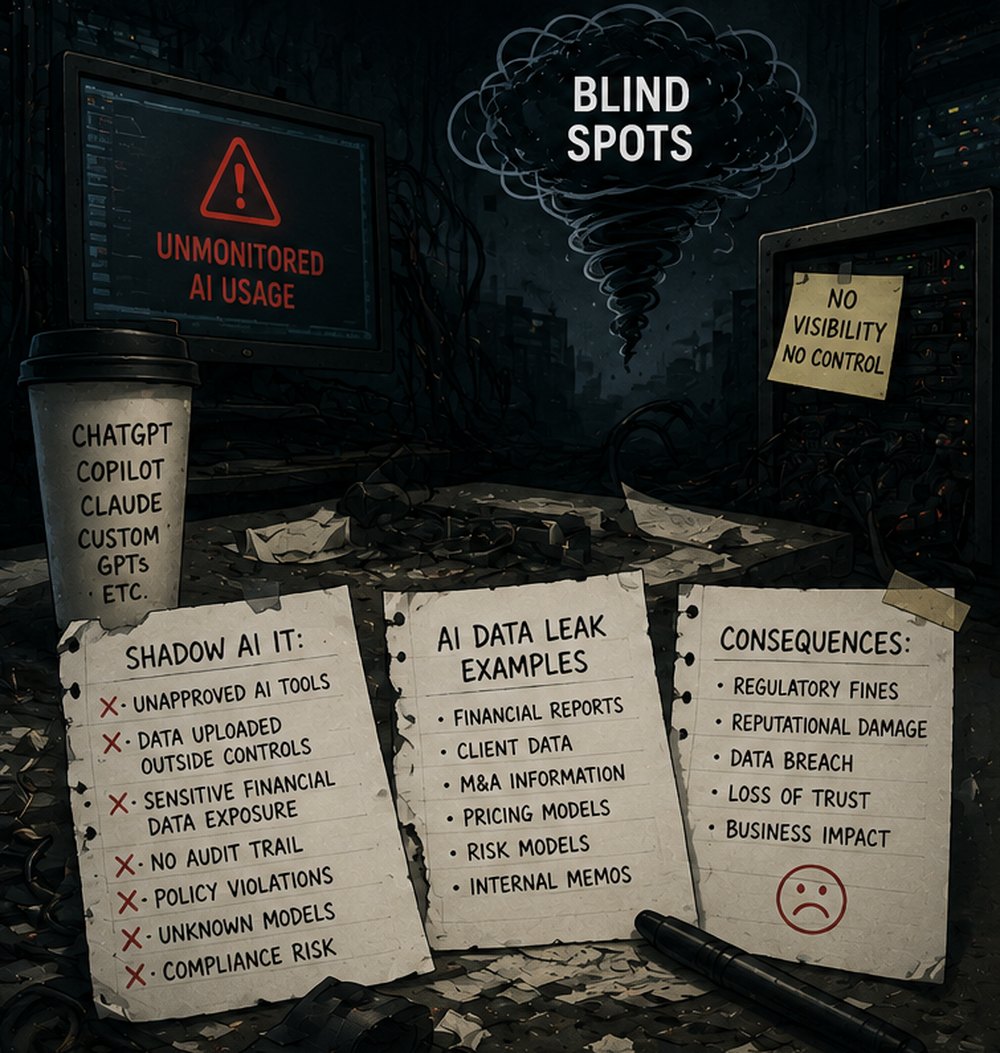
In the same research, 34% of AI-first organizations said AI was directly exploited in their most recent incident. Another 30% said AI use created an oversight or blind spot that contributed to it. The 30% is the harder one. Exploited is a security problem. A blind spot is an inventory problem.
The visible part
Most firms can describe the controls around their approved AI systems in some detail. The harder question is which other agents are running. The answer is usually procurement records, cloud logs, developer memory, and someone saying they think the data science team has something.
Inventory and scope
A workable inventory records what each system does, what data it touches, which identity it runs as, and who approved it.
Building an inventory is the obvious first step, and it carries a second benefit. ISO/IEC 42001 requires an organization to determine the boundaries and applicability of its AI management system under Clause 4.3. A scope statement is difficult to defend for systems nobody has enumerated. I have seen server inventories take months while new SaaS appeared every week. Agents are worse: a workflow, a browser extension, a script, a platform assistant, an API-connected service, or something a developer assembled on a Friday afternoon.
Ownership
Fastly reports that 51% of AI-first organizations have confusion over who handles incident response, compared with 23% of organizations that are not AI-first. It is the same question that sat underneath last week's Daybreak launch: capability arrives faster than the decision about who owns it. When an agent makes a bad call at 02:42, who gets paged? Security, platform, the application owner, the AI team, or whoever approved the workflow. There is no impressive version of "we were not sure" once the agent has finished doing the thing.
The report presents these as separate findings rather than cause and effect. They point the same way. An incident that has to find its owner is an incident that is still open.
Sources · Fastly, AI-first businesses are paying an AI speed tax when recovering ↗ · Global Security Research Report 2026 (PDF) ↗ · finews, Fastly study on AI-first strategy and cyberattacks ↗
← All dispatches